"... das Licht zurückwerfen" - Fragmente der Sappho
Eine Spurensuche in Lied und Lyrik
"Gemüt……völlig……ich könnte…... wenn's mir möglich wäre ... .. das Licht zurückwerfen ... " (Sappho)
Was bleibt von einem Menschen, wenn fast alles verloren ist?
Sappho, die legendäre Dichterin von Lesbos (ca. 600 v.Chr.), spricht zu uns über Jahrtausende hinweg – in Fragmenten, in Spuren, in brennenden Worten. Dieser Liederabend erkundet die Leerstellen der Liebe, die Zwischenräume der Sehnsucht und die Resonanzen von Sapphos Erbes in Musik und Lyrik quer durch die Jahrhunderte.
Sappho war eine der ersten Stimmen der Weltliteratur, die Liebe nicht als göttliches Prinzip oder moralische Tugend besang, sondern als zutiefst menschliches und körperliches Erleben. In ihren wenigen überlieferten Fragmenten wird die Liebe als eine Ur-Kraft erfahren, die den Körper zittern, das Herz rasen und die Sprache stocken lässt. Sie schreibt von der Nähe und der Entfernung, vom Begehren und vom Verlust, vom Blick, der verwundet, und der Stimme, die heilt. Sapphos Liebe ist nicht gebunden an Geschlecht, sondern an Erfahrung. Dass sie über Frauen schrieb, mit Frauen sprach, sie begehrte, sie besang, macht ihre Lyrik zu einem frühen Zeugnis weiblicher Selbstverortung.
Das Konzert entstand als Teil eines interdisziplinären Tryptichons über Claude Debussy's 'Chansons de Bilitis' und wurde gefördert vom Musikfonds.
Mit Liedern von Franz Schubert, Alma Mahler, George Crumb, Konstantia Gourzi, Olivier Messiaen und anderen ergänzen Claude Debussys Chansons de Bilitis zu einem Prisma, das Sapphos Licht – ihren Blick auf die Liebe – schillernd durch die Jahrhunderte zurückwirft.
Theresa Pilsl, Gesang und Text
Marlene Heiß, Klavier und Text
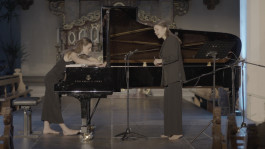
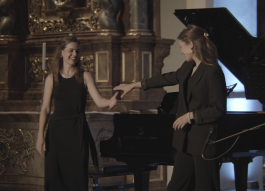
Konzert am 10.8.25 bei den Höri Musiktagen in Öhningen. Screenshots und Video (c) Greta Markurt


What remains of a person when almost everything is lost?
Sappho, the legendary poet of Lesbos (c. 600 BC), speaks to us – in fragments, in traces, in burning words. This recital explores the voids of love, the spaces between longing, and the resonances of Sappho's legacy in music and poetry across the centuries.
Sappho was one of the first voices in world literature to sing of love not as a divine principle or moral virtue, but as a deeply human and physical experience. In her few surviving fragments, love is experienced as a primal force that makes the body tremble, the heart race, and speech falter. She writes of closeness and distance, of desire and loss, of the gaze that wounds and the voice that heals. Sappho's love is not bound to gender, but to experience. The fact that she wrote about women, spoke to women, desired them, and sang about them makes her poetry an early testimony to female self-identification.
The concert was created as part of an interdisciplinary triptych on Claude Debussy's ‘Chansons de Bilitis’ and was funded by the Musikfonds.
With songs by Franz Schubert, Alma Mahler, George Crumb, Konstantia Gourzi, Olivier Messiaen, and others complement Claude Debussy's 'Chansons de Bilitis' to form a prism that reflects Sappho's light—her view of love—dazzlingly through the centuries.

"... das Licht zurückwerfen" - Fragmente der Sappho
Eine Spurensuche in Lied und Lyrik
"Gemüt……völlig……ich könnte…... wenn's mir möglich wäre ... .. das Licht zurückwerfen ... " (Sappho)
Was bleibt von einem Menschen, wenn fast alles verloren ist?
Sappho, die legendäre Dichterin von Lesbos (ca. 600 v.Chr.), spricht zu uns über Jahrtausende hinweg – in Fragmenten, in Spuren, in brennenden Worten. Dieser Liederabend erkundet die Leerstellen der Liebe, die Zwischenräume der Sehnsucht und die Resonanzen von Sapphos Erbes in Musik und Lyrik quer durch die Jahrhunderte.
Sappho war eine der ersten Stimmen der Weltliteratur, die Liebe nicht als göttliches Prinzip oder moralische Tugend besang, sondern als zutiefst menschliches und körperliches Erleben. In ihren wenigen überlieferten Fragmenten wird die Liebe als eine Ur-Kraft erfahren, die den Körper zittern, das Herz rasen und die Sprache stocken lässt. Sie schreibt von der Nähe und der Entfernung, vom Begehren und vom Verlust, vom Blick, der verwundet, und der Stimme, die heilt. Sapphos Liebe ist nicht gebunden an Geschlecht, sondern an Erfahrung. Dass sie über Frauen schrieb, mit Frauen sprach, sie begehrte, sie besang, macht ihre Lyrik zu einem frühen Zeugnis weiblicher Selbstverortung.
Das Konzert entstand als Teil eines interdisziplinären Tryptichons über Claude Debussy's 'Chansons de Bilitis' und wurde gefördert vom Musikfonds.
Mit Liedern von Franz Schubert, Alma Mahler, George Crumb, Konstantia Gourzi, Olivier Messiaen und anderen ergänzen Claude Debussys Chansons de Bilitis zu einem Prisma, das Sapphos Licht – ihren Blick auf die Liebe – schillernd durch die Jahrhunderte zurückwirft.
Theresa Pilsl, Gesang und Text
Marlene Heiß, Klavier und Text
Konzert am 10.8.25 bei den Höri Musiktagen in Öhningen. Screenshots und Video (c) Greta Markurt

What remains of a person when almost everything is lost?
Sappho, the legendary poet of Lesbos (c. 600 BC), speaks to us – in fragments, in traces, in burning words. This recital explores the voids of love, the spaces between longing, and the resonances of Sappho's legacy in music and poetry across the centuries.
Sappho was one of the first voices in world literature to sing of love not as a divine principle or moral virtue, but as a deeply human and physical experience. In her few surviving fragments, love is experienced as a primal force that makes the body tremble, the heart race, and speech falter. She writes of closeness and distance, of desire and loss, of the gaze that wounds and the voice that heals. Sappho's love is not bound to gender, but to experience. The fact that she wrote about women, spoke to women, desired them, and sang about them makes her poetry an early testimony to female self-identification.
The concert was created as part of an interdisciplinary triptych on Claude Debussy's ‘Chansons de Bilitis’ and was funded by the Musikfonds.
With songs by Franz Schubert, Alma Mahler, George Crumb, Konstantia Gourzi, Olivier Messiaen, and others complement Claude Debussy's 'Chansons de Bilitis' to form a prism that reflects Sappho's light—her view of love—dazzlingly through the centuries.