

beyond Kunstlied
Wege, den Handlungs- und Wirksamkeitsspielraum als Interpretin zu erweitern und die Lebendigkeit interpretativer Ansätze zu stärken
Das Dissertationsprojekt Beyond Kunstlied fragt danach, welche Handlungsfähigkeit (Agency) und Wirkung klassische Interpret*innen jenseits von Repräsentation und Reproduktion entfalten können. Das Projekt arbeitet mit einem epochenübergreifenden Kunstliedrepertoire. Im Fokus steht das Ausloten der Grenzen jener konventionellen Aufführungspraxis, die gegenwärtig gelehrt, geprobt und aufgeführt wird und die als ästhetisch wie performativ konform im Sinne institutioneller Traditionen gilt. Künstlerisches Experimentieren wird mit soziologischen, phänomenologischen und historischen Perspektiven verschränkt. So werden emanzipatorische Potenziale interpretierender Musiker*innen sichtbar – und ein Möglichkeitsraum, der jenseits der Konformität liegt.
In einer Haltung kritischer Aufführungspraxis hinterfragt Beyond Kunstlied implizite Machtstrukturen, normative Erwartungen und die Verbindung von Habitus und Handlungsspielraum. Es betont die Wechselwirkungen zwischen der Bühne, die wir bespielen und der Welt, in der wir leben. Durch performative, kollaborative und kommunikative Interventionen entstehen alternative Formen des Musizierens und der gängigen Interpretationsweisen. Dadurch entsteht eine Verschiebung der Prioritäten: Anstelle der Logiken von Vergleichbarkeit, Perfektion und Wettbewerb treten die Kultivierung von Aufmerksamkeit und Sensibilität; entschleunigtes, dialogisches Lernen; unvollkommene Spielräume und Care statt Konkurrenz.
Konzertprojekte im Forschungskontext


beyond Kunstlied
pathways to expand the scope of artistic agency and impact as a performer and to enhance the vitality of interpretive approaches
The dissertation project Beyond Kunstlied examines the potential of classical songs as a medium of critical performance practice. The focus is on exploring the limits of the conventional performance practice, which is primarily taught, rehearsed and performed today and is considered aesthetically and performatively conformist in the sense of an institutional tradition. Through artistic experimentation in combination with musicological and historical contextualization, the realm of possibilities beyond conformity is explored.
Critical practice in the sense of Beyond Kunstlied aims to uncover and reflect on the historical fault lines of conventional practice, and to derive the possibility of change in the present from the recognition of their historical variability. It questions implicit power structures, normative expectations, and the connection between habitus and agency. It emphasizes the interrelationships between the stage we perform on and the world we live in. By experimenting with performative, collaborative and communicative strategies, the project attempts to develop forms of music-making based on equality and openness - forms that make a plurality of voices, bodies and subjectivities audible and reconfigure the relationship between performer, song repertoire and audience.
"... das Licht zurückwerfen" - Fragmente der Sappho
Eine Spurensuche in Lied und Lyrik
"Gemüt……völlig……ich könnte…... wenn's mir möglich wäre ... .. das Licht zurückwerfen ... " (Sappho)
Was bleibt von einem Menschen, wenn fast alles verloren ist?
Sappho, die legendäre Dichterin von Lesbos (ca. 600 v.Chr.), spricht zu uns über Jahrtausende hinweg – in Fragmenten, in Spuren, in brennenden Worten. Dieser Liederabend erkundet die Leerstellen der Liebe, die Zwischenräume der Sehnsucht und die Resonanzen von Sapphos Erbes in Musik und Lyrik quer durch die Jahrhunderte.
Sappho war eine der ersten Stimmen der Weltliteratur, die Liebe nicht als göttliches Prinzip oder moralische Tugend besang, sondern als zutiefst menschliches und körperliches Erleben. In ihren wenigen überlieferten Fragmenten wird die Liebe als eine Ur-Kraft erfahren, die den Körper zittern, das Herz rasen und die Sprache stocken lässt. Sie schreibt von der Nähe und der Entfernung, vom Begehren und vom Verlust, vom Blick, der verwundet, und der Stimme, die heilt. Sapphos Liebe ist nicht gebunden an Geschlecht, sondern an Erfahrung. Dass sie über Frauen schrieb, mit Frauen sprach, sie begehrte, sie besang, macht ihre Lyrik zu einem frühen Zeugnis weiblicher Selbstverortung.
Das Konzert entstand als Teil eines interdisziplinären Tryptichons über Claude Debussy's 'Chansons de Bilitis' und wurde gefördert vom Musikfonds.
Mit Liedern von Franz Schubert, Alma Mahler, George Crumb, Konstantia Gourzi, Olivier Messiaen und anderen ergänzen Claude Debussys Chansons de Bilitis zu einem Prisma, das Sapphos Licht – ihren Blick auf die Liebe – schillernd durch die Jahrhunderte zurückwirft.
Theresa Pilsl, Gesang und Text
Marlene Heiß, Klavier und Text
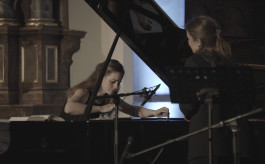
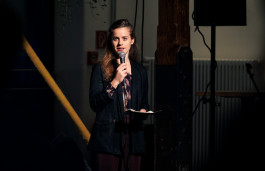
Konzert am 10.8.25 bei den Höri Musiktagen in Öhningen. Screenshots und Video (c) Greta Markurt
beyond Kunstlied
pathways to expand the scope of artistic agency and impact as a performer and to enhance the vitality of interpretive approaches
The dissertation project Beyond Kunstlied examines the potential of classical songs as a medium of critical performance practice. The focus is on exploring the limits of the conventional performance practice, which is primarily taught, rehearsed and performed today and is considered aesthetically and performatively conformist in the sense of an institutional tradition. Through artistic experimentation in combination with musicological and historical contextualization, the realm of possibilities beyond conformity is explored.
Critical practice in the sense of Beyond Kunstlied aims to uncover and reflect on the historical fault lines of conventional practice, and to derive the possibility of change in the present from the recognition of their historical variability. It questions implicit power structures, normative expectations, and the connection between habitus and agency. It emphasizes the interrelationships between the stage we perform on and the world we live in. By experimenting with performative, collaborative and communicative strategies, the project attempts to develop forms of music-making based on equality and openness - forms that make a plurality of voices, bodies and subjectivities audible and reconfigure the relationship between performer, song repertoire and audience.